Finding Support for an Autistic Child in Dakar: A Guide for English-Speaking Families
· par Tutonovas
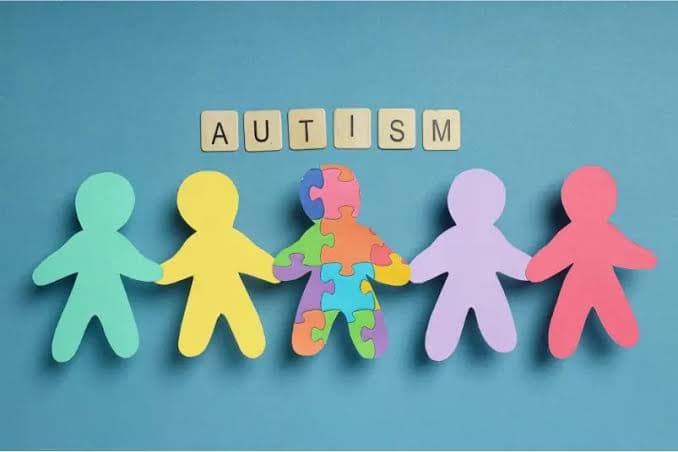
Whether you've just arrived in Dakar with an autistic child, or you're a family here who has started asking questions, the same difficulty comes up: information is scattered, and much of what you find online describes systems that don't exist in Senegal.
Here's an honest map.
Assessment: where to go
Three public facilities are recognised for autism care in Senegal, all in Dakar: the Keur Khaleyi child psychiatry unit at Fann Hospital, the children's hospital in Diamniadio, and the psychiatric hospital in Thiaroye. The Dakar Autism Resource Centre is a further option with semi-private status.
Consultations are typically in French. If you don't speak French, arrange an interpreter or a bilingual accompanying professional in advance, assessment relies heavily on detailed developmental history, and nuance matters.
Many international families also pursue or confirm assessment abroad during home leave. Both routes are valid.
Therapy: what's available locally
ABA Senegal provides Applied Behaviour Analysis therapy for children with autism in Dakar, supervised by a certified behaviour analyst, and offers school support alongside it. They work in English.
Speech and language therapy, occupational therapy and psychomotor therapy exist in Dakar but specialists are limited in number. Waiting lists are common and provision is concentrated in the capital.
Schools: the honest picture
International schools in Dakar generally state they can accommodate students on the autism spectrum, though often with the qualifier of Level 1 (requiring the least support) and subject to available resources and current caseloads.
Beyond that, the picture varies enormously school by school. Questions worth asking before enrolment:
Have you supported an autistic student before? What did that look like in practice? Do you allow an external shadow teacher in class? Is there a quiet space a child can access when overwhelmed? How do you handle sensory needs, noise, lighting, uniform requirements? What's your approach to unstructured time? Break and lunch are frequently the hardest part of the day, and rarely discussed at admission.
The gap almost every family runs into
Senegal's Social Orientation Law No. 2010-15 sets out educational rights for children with disabilities, but there is no state-funded classroom aide. No local body assigns and pays for a support worker.
For families used to a system where a diagnosis triggers an entitlement, this is the hardest adjustment. Here, a diagnosis gives you understanding and recommendations — arranging the actual day-to-day support is yours to organise.
Practical things that help
Predictability over flexibility. Visual schedules and advance warning of changes reduce difficult moments more reliably than any behavioural technique.
Take sensory needs seriously. Heat, noise and crowding are significant realities in Dakar. Sensory load accumulates through the day; the "meltdown" at 4pm usually began at 8am.
Watch for after-school collapse. A child who holds it together at school and falls apart at home is not misbehaving — they've been masking all day and have nothing left. It's a sign the school day is costing too much, not a discipline issue.
Find other parents. Local associations including Enfants Soleil Sénégal and ABA Senegal connect families. Informal parent networks in Dakar are often the fastest source of genuinely current information, which paediatrician sees children quickly, which school actually delivers what it promises.
Where Tutonovas fits
We're an educational service, not a clinic. We provide the support that comes after, or during the wait: shadow teachers and learning support aides, specialised educators working on learning and independence at home, and adapted tutoring.
We work in English and French, across Dakar, and we work alongside whatever medical or therapeutic team your child already has.
Message us on WhatsApp including if you simply want to ask what's realistic in your situation.
FAQ
We're only in Senegal for two years. Is it worth starting support? Yes. Continuity matters, but so does not losing two years. We can also produce handover documentation for your next placement.
Can you work alongside our child's ABA therapist? Yes, and it usually works better that way. We coordinate rather than duplicate.
Do you support non-speaking children? Yes. Support is built around the child's actual communication, whatever form it takes.
Recevoir les prochains articles
Un email seulement quand un nouvel article est publié — pas de spam.
Une question sur l'accompagnement de votre enfant ?
Démarrer un diagnostic